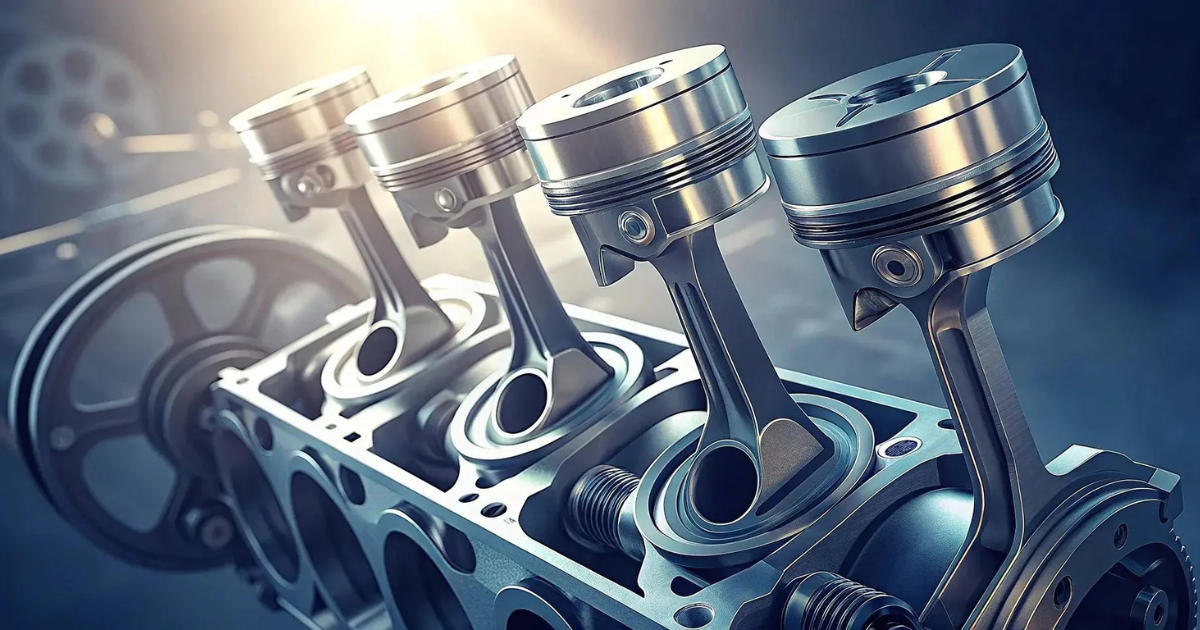
Pistons are among the most essential components of an internal combustion engine, playing a direct role in converting fuel into mechanical power. Though small in size compared to the overall engine, pistons are responsible for driving the motion that ultimately turns the wheels of a vehicle. Understanding how pistons work and their role within the engine helps in appreciating the complexity and precision of modern automotive engineering.
What is a Piston?
A piston is a cylindrical metal component that moves up and down inside the engine cylinder. It fits tightly within the cylinder walls, forming a movable seal that allows pressure to build during combustion. Pistons are typically made from aluminum alloys due to their lightweight nature and excellent heat conductivity.
Each piston is connected to a connecting rod, which in turn is linked to the crankshaft. This connection allows the up-and-down (reciprocating) motion of the piston to be converted into rotational motion, which powers the vehicle.
Main Functions of a Piston
Pistons perform several critical functions within an engine:
1. Power Generation
The primary role of a piston is to transfer the force created by the combustion of the air-fuel mixture to the crankshaft. When the mixture ignites, it creates high-pressure gases that push the piston downward, generating power.
2. Compression of Air-Fuel Mixture
Before combustion occurs, the piston moves upward to compress the air-fuel mixture inside the cylinder. This compression increases the efficiency and power of the explosion.
3. Exhaust Gas Removal
After combustion, the piston moves upward again to push exhaust gases out of the cylinder through the exhaust valve, preparing the chamber for the next cycle.
4. Maintaining Sealing
Pistons help maintain a tight seal within the cylinder using piston rings. This ensures that combustion gases do not leak and that engine oil does not enter the combustion chamber.
Components of a Piston
A piston is made up of several parts that work together to ensure smooth operation:
- Piston Crown: The top surface that faces the combustion chamber
- Piston Rings: Circular rings that provide sealing, control oil, and transfer heat
- Piston Skirt: The lower portion that guides the piston within the cylinder
- Wrist Pin (Gudgeon Pin): Connects the piston to the connecting rod
Each component is carefully designed to withstand high pressure and temperature conditions.
Types of Pistons
Different engine designs require different types of pistons:
Flat-Top Pistons
These have a flat surface and are commonly used in standard engines. They provide efficient combustion and are easy to manufacture.
Dome Pistons
These pistons have a raised top, increasing compression and improving performance. They are often found in high-performance engines.
Dish Pistons
With a concave surface, dish pistons help lower compression ratios and are commonly used in turbocharged engines.
Slipper Pistons
Designed to reduce weight and friction, these pistons are commonly used in modern high-speed engines.
Materials Used in Pistons
Pistons must endure extreme conditions, so material selection is crucial:
- Aluminum Alloys: Lightweight and excellent heat dissipation
- Cast Iron: Durable but heavier, used in some heavy-duty applications
- Steel: Used in high-performance or diesel engines for added strength
Modern pistons are often coated with special materials to reduce friction and wear.
Challenges and Common Issues
Pistons operate under intense stress and can face several issues over time:
- Overheating: Can cause piston expansion and damage
- Wear and Tear: Leads to reduced sealing and performance
- Cracking or Melting: Occurs under extreme conditions or poor lubrication
- Carbon Buildup: Affects efficiency and combustion
Proper engine maintenance, including regular oil changes and cooling system care, helps extend piston life.
Conclusion
Pistons are a fundamental part of an engine’s operation, transforming the energy from fuel combustion into usable mechanical motion. Their precise movement and durability are key to engine performance, efficiency, and longevity.
As automotive technology advances, piston designs continue to improve, becoming lighter, stronger, and more efficient. Whether in everyday vehicles or high-performance machines, pistons remain at the core of how engines deliver power and keep the world moving.