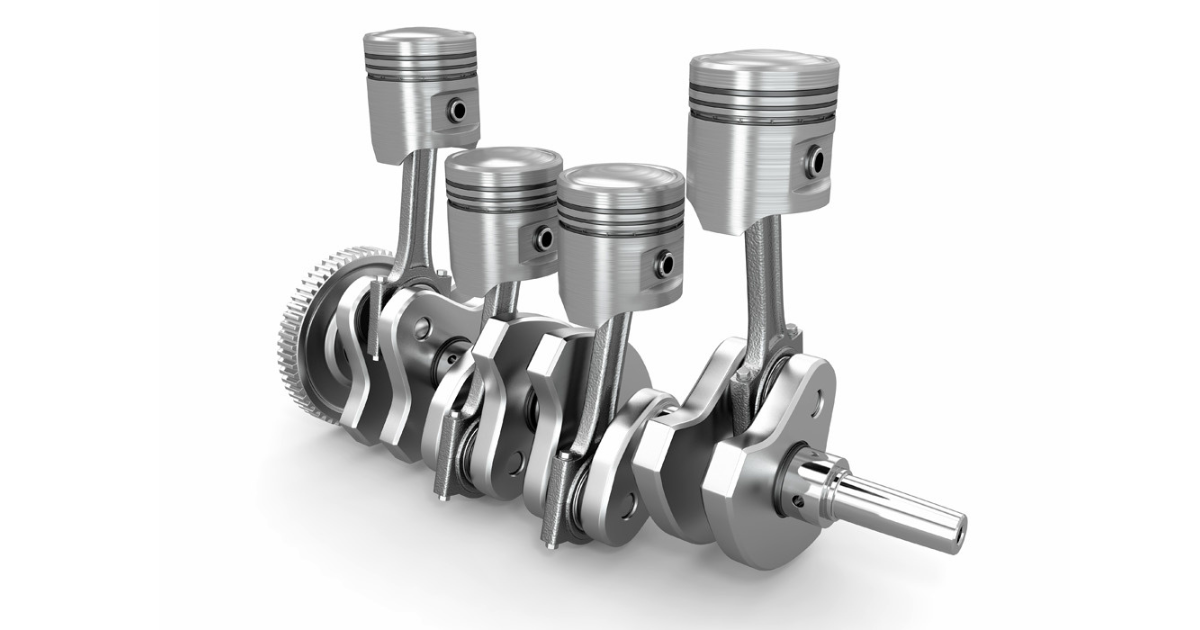
The crankshaft is one of the most vital components of an internal combustion engine, responsible for converting the linear motion of pistons into rotational motion that ultimately powers a vehicle’s wheels. Without the crankshaft, the energy produced during combustion would not be usable for driving. Its design, strength, and precision play a crucial role in engine performance, efficiency, and durability.
What is a Crankshaft?
A crankshaft is a long, rotating shaft located in the lower part of the engine block, specifically within the crankcase. It is connected to the pistons via connecting rods. As pistons move up and down during the combustion cycle, the crankshaft transforms this reciprocating motion into a continuous circular motion.
Crankshafts are typically made from forged steel or cast iron to withstand high levels of stress, pressure, and vibration. In high-performance engines, specially forged or billet steel crankshafts are used for added strength and durability.
Main Functions of a Crankshaft
The crankshaft performs several essential functions that keep the engine running smoothly:
1. Converting Motion
The primary function of the crankshaft is to convert the up-and-down motion of pistons into rotational motion. This rotation is then transferred to the transmission system, which ultimately drives the vehicle’s wheels.
2. Power Transmission
The crankshaft transmits the power generated during combustion to other engine components and systems, including the flywheel, which helps maintain smooth engine operation.
3. Balancing the Engine
Crankshafts are equipped with counterweights that help balance the engine and reduce vibrations. This ensures smoother performance and minimizes wear on engine components.
4. Driving Auxiliary Components
The crankshaft also powers various engine accessories such as the alternator, water pump, and air conditioning compressor through belts or chains.
Key Components of a Crankshaft
A crankshaft is made up of several precisely engineered parts:
- Main Journals: These rest on the engine bearings and allow the crankshaft to rotate smoothly
- Crank Pins (Rod Journals): Connect to the connecting rods and transfer piston motion
- Counterweights: Balance the rotating assembly and reduce vibration
- Crank Throws: Offset sections that create the leverage needed for rotation
- Flange: Connects the crankshaft to the flywheel
Each part must be manufactured with high precision to ensure proper alignment and operation.
Types of Crankshafts
Crankshafts come in different types depending on engine design and manufacturing process:
Cast Crankshaft
Made by casting molten metal into a mold, this type is cost-effective and commonly used in standard vehicles. It provides sufficient strength for everyday driving conditions.
Forged Crankshaft
Created by shaping heated metal under high pressure, forged crankshafts are stronger and more durable. They are typically used in high-performance and heavy-duty engines.
Billet Crankshaft
Machined from a solid block of steel, billet crankshafts offer maximum strength and precision. These are used in racing and specialized applications but are more expensive.
Design Considerations
Designing a crankshaft involves balancing strength, weight, and efficiency. Engineers must consider several factors:
- Material Strength: To handle high torque and stress
- Weight: Lighter crankshafts improve engine responsiveness
- Balance: Proper counterweight placement reduces vibration
- Lubrication: Oil passages are integrated to ensure smooth operation
Advancements in manufacturing and computer-aided design have significantly improved crankshaft performance and longevity.
Common Issues and Maintenance
Over time, crankshafts can develop problems, especially if the engine is not properly maintained:
- Wear on Bearings: Can lead to knocking sounds and reduced efficiency
- Cracks or Fatigue: Caused by prolonged stress or poor-quality materials
- Imbalance: Results in excessive vibration and engine damage
- Oil Starvation: Leads to overheating and potential failure
Regular oil changes, proper lubrication, and timely inspections are essential to keep the crankshaft in good condition.
Conclusion
The crankshaft is the backbone of an engine’s mechanical operation, transforming the energy produced by pistons into usable rotational motion. Its strength, precision, and balance are key to ensuring smooth and efficient engine performance.
As automotive technology continues to evolve, crankshaft designs are becoming lighter, stronger, and more efficient. Whether in everyday vehicles or high-performance machines, the crankshaft remains a fundamental component that keeps engines running and vehicles moving.