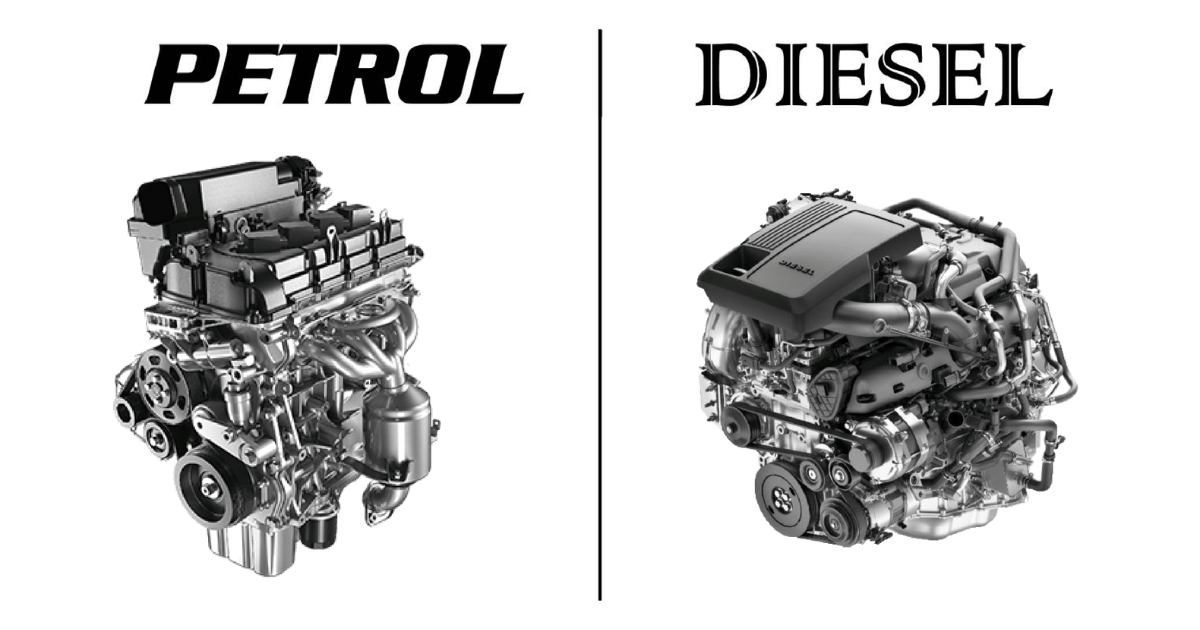
When choosing a car, one of the most important decisions is selecting the type of engine. The two most common options are petrol and diesel engines. While both are types of internal combustion engines, they differ significantly in how they operate, their efficiency, performance, and overall cost of ownership. Understanding these differences can help you make a more informed decision based on your driving needs.
What is a Petrol Engine?
A petrol engine, also known as a gasoline engine, uses petrol as fuel to generate power. It operates on the principle of spark ignition. In this type of engine, a mixture of air and fuel is compressed inside the cylinder and then ignited by a spark plug.
Petrol engines are widely used in passenger cars due to their smooth operation and quick acceleration. They are generally quieter and produce less vibration compared to diesel engines. This makes them ideal for city driving and short-distance travel.
What is a Diesel Engine?
A diesel engine uses diesel fuel and operates on the principle of compression ignition. Instead of using a spark plug, it compresses air to a very high pressure, which raises the temperature enough to ignite the injected fuel automatically.
Diesel engines are known for their durability and fuel efficiency. They produce more torque, making them suitable for heavy vehicles, long-distance travel, and carrying loads. However, they tend to be noisier and may have higher initial costs.
Key Differences Between Petrol and Diesel Engines
1. Ignition Process
The main difference lies in how fuel is ignited. Petrol engines use spark plugs, while diesel engines rely on high compression for ignition.
2. Fuel Efficiency
Diesel engines are generally more fuel-efficient than petrol engines. They extract more energy from the same amount of fuel, making them ideal for long journeys and highway driving.
3. Power and Torque
Petrol engines deliver higher speed and smoother acceleration, while diesel engines produce more torque, which is useful for towing and heavy-duty applications.
4. Maintenance and Cost
Petrol cars are usually cheaper to purchase and maintain. Diesel engines, although more efficient, can be more expensive to repair due to their complex design.
5. Noise and Vibration
Petrol engines are quieter and smoother. Diesel engines, due to high compression, tend to be louder and produce more vibration.
Advantages of Petrol Engines
- Smooth and quiet performance
- Lower initial cost
- Better for short trips and city driving
- Faster acceleration
Petrol engines are ideal for drivers who prioritize comfort and convenience in everyday use.
Advantages of Diesel Engines
- Higher fuel efficiency
- Greater torque and pulling power
- Better for long-distance driving
- Longer engine lifespan
Diesel engines are suitable for those who frequently travel long distances or require more power for heavy loads.
Which One Should You Choose?
The choice between petrol and diesel depends on your driving habits and budget:
- If you mostly drive in the city and prefer a quieter, smoother ride, a petrol car is a better option.
- If you often travel long distances or need a vehicle for heavy-duty use, a diesel engine is more suitable.
You should also consider fuel prices, maintenance costs, and environmental impact when making your decision.
Environmental Considerations
Both engine types have environmental impacts. Petrol engines generally produce fewer nitrogen oxides but more carbon dioxide, while diesel engines emit less CO₂ but more nitrogen oxides and particulates. Modern technologies are helping reduce emissions in both types, making them more eco-friendly.
Conclusion
Petrol and diesel engines each have their own strengths and weaknesses. Petrol engines offer smooth performance and affordability, while diesel engines excel in efficiency and power. By understanding how each engine works and what it offers, you can choose the one that best suits your lifestyle and driving needs.
As automotive technology continues to evolve, both petrol and diesel engines are becoming more advanced, efficient, and environmentally friendly, ensuring they remain relevant choices for years to come.