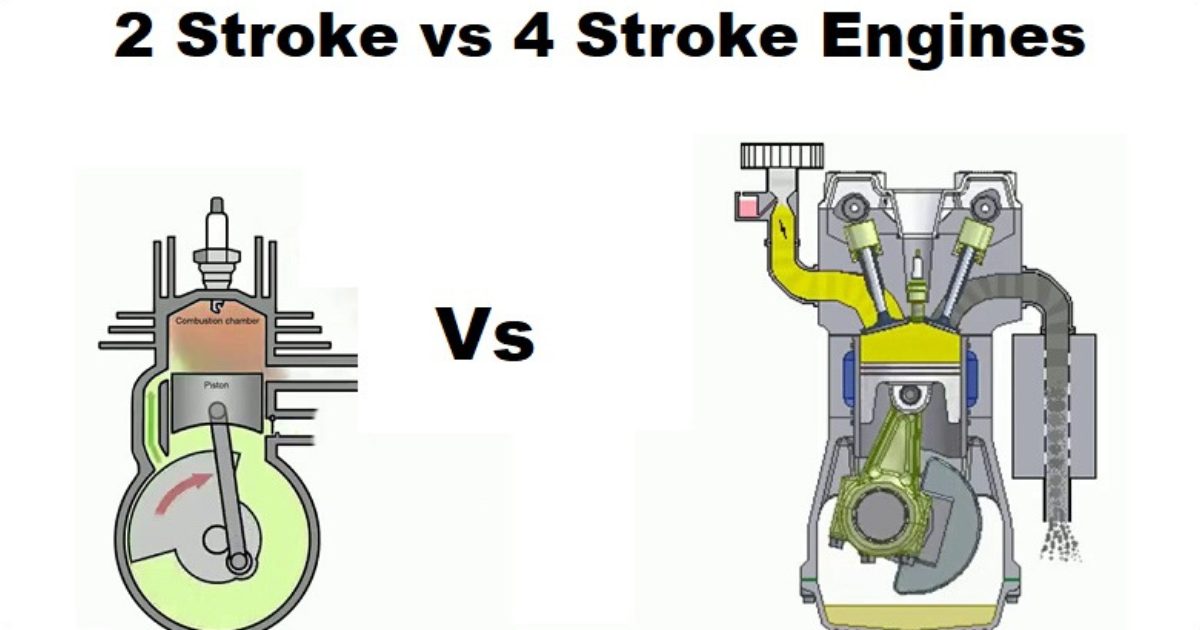
Engines are the core of any vehicle or machine, and one of the key ways they are classified is by their operating cycle. The two most common types are two-stroke and four-stroke engines. While both are internal combustion engines designed to convert fuel into mechanical energy, they differ in how they complete the combustion process. Understanding these differences can help you choose the right engine for your needs and better appreciate how engines function.
What is a Two-Stroke Engine?
A two-stroke engine completes a full power cycle in just two piston strokes (one upward and one downward movement) during a single crankshaft revolution. This means that power is generated with every revolution of the crankshaft.
In a two-stroke engine, the intake and exhaust processes occur simultaneously with compression and combustion. This overlapping of functions allows the engine to be simpler in design, with fewer moving parts such as valves.
Two-stroke engines are commonly found in motorcycles, chainsaws, and small outboard motors due to their lightweight construction and high power-to-weight ratio.
What is a Four-Stroke Engine?
A four-stroke engine, on the other hand, completes a power cycle in four piston strokes (intake, compression, power, and exhaust) over two crankshaft revolutions. This design separates each stage of the combustion process, making it more controlled and efficient.
Four-stroke engines are widely used in cars, trucks, and larger motorcycles. They are known for their reliability, fuel efficiency, and smoother operation compared to two-stroke engines.
How Two-Stroke Engines Work
The two-stroke cycle consists of two main stages:
1. Compression and Intake
As the piston moves upward, it compresses the air-fuel mixture in the combustion chamber. At the same time, a fresh mixture is drawn into the crankcase.
2. Power and Exhaust
When the piston reaches the top, the mixture ignites, forcing the piston downward. This movement generates power while simultaneously expelling exhaust gases and drawing in fresh fuel.
Because these processes overlap, two-stroke engines produce power more frequently but less efficiently.
How Four-Stroke Engines Work
The four-stroke cycle includes four distinct stages:
1. Intake Stroke
The piston moves downward, drawing in the air-fuel mixture.
2. Compression Stroke
The piston moves upward, compressing the mixture.
3. Power Stroke
The compressed mixture is ignited, pushing the piston downward and generating power.
4. Exhaust Stroke
The piston moves upward again, expelling the burnt gases.
This step-by-step process ensures better fuel combustion and reduced emissions.
Key Differences Between Two-Stroke and Four-Stroke Engines
1. Efficiency
Four-stroke engines are more fuel-efficient because they burn fuel more completely. Two-stroke engines tend to waste some fuel during the exhaust process.
2. Power Output
Two-stroke engines produce more power relative to their size because they generate power with every crankshaft revolution. Four-stroke engines produce power every two revolutions, making them less powerful in comparison.
3. Complexity
Two-stroke engines have a simpler design with fewer components, making them easier to manufacture and maintain. Four-stroke engines are more complex due to additional parts like valves and camshafts.
4. Emissions
Two-stroke engines produce higher emissions due to incomplete combustion and oil mixing with fuel. Four-stroke engines are cleaner and more environmentally friendly.
5. Durability
Four-stroke engines are generally more durable and long-lasting, while two-stroke engines may wear out faster due to higher operating temperatures and less efficient lubrication.
Advantages of Two-Stroke Engines
- Lightweight and compact
- Higher power-to-weight ratio
- Simpler design with fewer parts
- Lower initial cost
These engines are ideal for small machines and applications where weight and size are critical.
Advantages of Four-Stroke Engines
- Better fuel efficiency
- Lower emissions
- Smoother and quieter operation
- Longer lifespan
These engines are suitable for vehicles that require reliability and efficiency over long periods.
Conclusion
Both two-stroke and four-stroke engines have their own strengths and limitations. Two-stroke engines excel in simplicity and power, while four-stroke engines offer better efficiency, durability, and environmental performance.
Choosing between the two depends on your specific needs. If you require a lightweight and powerful engine for short-term use, a two-stroke engine may be ideal. However, for everyday vehicles and long-term reliability, four-stroke engines remain the preferred choice.